Thursday, 23 June 2022

Capability Deficit in Leadership of HEIs
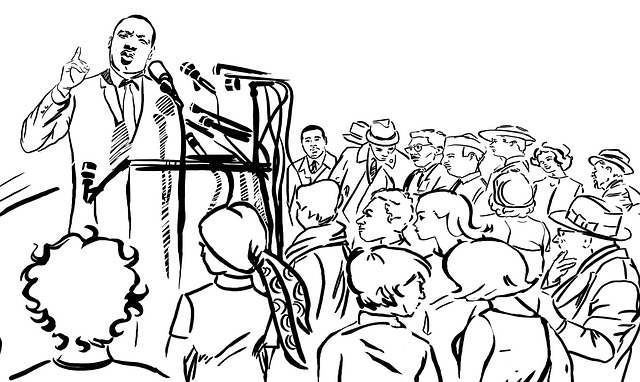


Being a Vice-Chancellor or Head of an Institution of Higher Education is not a bed of roses as lot of people and aspirants for such jobs may be thinking. These positions are extremely difficult, and not a lot of bright people want that kind of job. It is an unfortunate situation that the system we have set up in higher education seems to recruit for such positions from a pool of candidates that have neither been trained nor have they been given any incentives to develop the skills necessary for academic leadership. With the rise of alternative education options, crises in financial outlays and devaluation of formal college degrees, HEIs face challenging times in the decades to come and there is more need than ever before to hire the right leaders with the right experiences and the right skill sets.

Repeatedly, media has been flagging the issue about leadership-crisis in HEIs, for public attention, which has always been known to people in academics and the government. News18 had done a story (https://www.news18.com/news/india/unfit-dozens-in-the-vice-chancellor-pro-vice-chancellor-race-515870.html ) in 2012, “Unfit dozens in the Vice Chancellor, Pro Vice Chancellor race.” The Hindu had done a story titled - ‘Public inquiry’ by JNUTA finds V-C unfit for position - on JNU V-C Jagadesh Kumar in October 2017 (https://www.thehindu.com/news/cities/Delhi/public-inquiry-by-jnuta-finds-v-c-unfit-for-position/article19935324.ece ). Times of India had also reported it prominently. It cannot be a mere accident that Prof. Jagadesh Kumar now heads the UGC. Times News Network, in 2019 had published a research finding that 75% of Vice Chancellors in the country were unfit for the job they held.

In academic institutions, faculty begin their careers in the role of entry-level assistant professors usually after their Ph.D. They are appointed based on their prior peer-reviewed publications and teaching skills but rarely because of their leadership and administrative skills. Few years later, the assistant professor applies for promotion presenting a docket of more than 100 pages of documentation consisting almost entirely of research publications, teaching evaluations, letters of recommendation, and grants and awards received. Particularly in top institutions, most of the weight is placed on research publications, then teaching, then service and once again, leadership and administrative experience are rarely given strong weight in promotion decisions. Without strong research publications, faculty cannot be promoted regardless of their teaching and leadership excellence. Sure, some faculty stay where they are as purely a research and teaching faculty member, but the upward career mobility is usually possible only after one has achieved a full Professor’s rank.

Faculty positions such as Professor of Psychology require people who love analysing data, investigating phenomena, and communicating results through writing or in the classroom. On the other hand, educational administrator positions like a Dean, Provost, or a Vice Chancellor require people who love problem solving, making difficult decisions, managing teams and projects, and evaluating and taking risks. Yet, it is very rare for a college or university to hire a principal or a Vice chancellor who has not been a lifelong academic.

Academics sometimes have a bit of an unfortunate reputation of being big picture thinkers, with their heads in the clouds (or ivory tower) and disconnected from the realities of everyday life. They start a research project, and then get excited by another new idea several days later, only to end up after several months with a dozen great ideas yet none close to being completed.

Faculty do not learn how to make decisions as an Assistant Professor, where their main concern is to complete the research project and get it published in some top journal that only a handful of other academics in their field will read. Research publications take months if not years to go through the peer review and editing process. Decisions in higher education leadership, especially in the face of crises such as a pandemic, need to be made within days if not hours. The work context is completely different as well, even though both the jobs are in academia.

One reason why leadership in HEIs has been losing its credibility is that so many academic leaders are not good at making long-run decisions for the health of their institutions. The most obvious example is where they fail protect the integrity of the curriculum in the face of faculty desires to teach whatever the faculty finds interesting. Higher education is quickly losing its value proposition, becoming out-of-date, inefficient, and losing credibility in the workplace, due to mindless tactical tinkering with the curriculum and the processes. We may have been so focused on hiring high-quality researchers and teachers, that we forgot they need to also be high-quality leaders and administrators.

So what is the solution?

First and foremost, early career faculty, regardless of their core field of study, must receive training on leadership, team development, risk management and related skills required for higher education administration.

Second, there is a need to change the tenure and promotion criteria for faculty to pursue such trainings. Unless one wants to remain a research or teaching professor for rest of one’s career, tenure and promotion should be granted only that faculty, who can also lead and administer.

Third and finally, academia should consider outside leaders and businessmen who have the necessary skill sets to lead large complex organizations. There are a whole community of people who got their PhD but decided against traditional research and teaching careers. They may be qualified and exceptional in academic leadership positions.

*****

Labels: , , , , , , , ,

Friday, 22 October 2021

B-Schools Gone Adrift


Harvard Business School defines its mission as “(t)o educate leaders who make a difference in the world.” Tuck School of Business states its mission as, “Tuck develops wise, decisive leaders who better the world through business.” Stanford Graduate School of Business aims to “(c)reate ideas that deepen and advance our understanding of management and with those ideas to develop innovative, principled, and insightful leaders who change the world,” and MIT’s Sloan School of Management says “(t)o develop principled, innovative leaders who improve the world and to generate ideas that advance management practice.”  INSEAD, the business school for the world, has the mission: “We bring together people, cultures and ideas to develop responsible leaders who transform business and society”

IIMA aims “(t)o continue to be recognized as a premier global management school operating at the frontiers of management education and practice while creating a progressive and sustainable impact on society.” IIMB has an elaborate mission statement, “Nurture innovative global business leaders, entrepreneurs, policy-makers and social change agents through holistic and transformative education - Provide thought leadership that is contextually embedded and socially relevant and makes positive impact - Pursue excellence in education and thought leadership simultaneously without making any trade-offs.” IIM Kolkata states its mission as, “(t)o develop innovative and ethical future leaders capable of managing change and transformation in a globally competitive environment and to advance the theory and practice of management.”

It is clearly discernible from the above that the top-ranked Business Schools of the world are now about ‘leaders’ and ‘leadership’ where ‘management’ is sometimes mentioned in the passing and ‘business’ is practically absent. Some scholars argue that although management and leadership overlap, the two activities are not synonymous. Furthermore, the degree of overlap is a point of disagreement. In fact, some individual see them as extreme opposites, and they believe that good leader cannot be a good manager and the opposite is true.

It is also clear that business schools have substituted leadership paradigm for the managerial one in stating their mission or purpose. The consequential question that emerges is whether the leadership paradigm constitutes an adequate foundation for a professional business school. One of the central features of a bona fide profession is possession of a coherent body of expert knowledge erected on a well-developed theoretical foundation.

Despite tens of thousands of studies and writings on leadership since the days of the Ohio State Leadership Studies, several scholarly reviews of the literature on leadership have found little progress in the field. Most studies failed to even define the terms ‘leader’ and ‘leadership.’ There are almost as many definitions of leadership as there are persons who have attempted to define the concept. Competing theories abound. We find great men theories, trait theories, environmental theories, person-situation theories, interaction-expectation theories, humanistic theories, exchange theories, behavioural theories and perceptual and cognitive theories. The dynamics of leadership have remained very much a puzzle. We still know little about what makes a good leader. Research that aims to decipher intrapsychic thought processes and resulting actions involves the study of "psycho-political drama" that relates managerial personality both to role behaviour and to the administrative setting.

In business schools in India, leadership is possibly being taught, using an ad hoc, convenience based amalgam of any of three distinctly different approaches, each of which possesses a certain validity but no one of which in whole or in part, make up for an element of a genuinely professional education. The first approach focuses on content and the transmission of explicit knowledge derived from academic theories in the fields of psychology, sociology, and economics. A second approach focuses on the development of interpersonal skills and their application to small-group situations. In this approach, leadership is conceptualized as tacit knowledge that must be mastered through hands-on practice rather than as a matter of explicit knowledge or content. A third approach associates leadership with personal growth and self-discovery and focuses on giving students opportunities for personal development. This approach gives students a great deal of freedom to explore personal values and use a variety of exercises and self-assessments, such as the MBTI, in an attempt to help students integrate discoveries about themselves into their career choices and professional lives.

Thoughts of leaders and leadership bring a wide array of images to mind, often conveying emotional reactions. Some leaders elicit thoughts of strength, power, and care; others recall the forces of terror, malevolence, and destructiveness. Our pervasive judgments of a leader’s degree of goodness or evil are reflected in epithets such as Ashoka the Great, Alexander the Great or Akbar the Great yet not everyone agrees that they were all great. For some, they were ‘the terrible.’

Our most secret desire, the one that inspires all our deeds and designs, is "to be praised." Yet we never confess this because to announce such a pitiful and humiliating weakness arising from a sense of loneliness and insecurity, a feeling that afflicts both the fortunate and the unfortunate with equal intensity, seems dishonourable. We are not sure of who we are or what do we do. Full as we may be of our own worth, we are distressed by anxiety and long to receive approval from no matter where or no matter whom. Evidence shows that because narcissistic personalities are often driven by intense needs for power and prestige to assume positions of authority and leadership, individuals with such characteristics are found rather frequently in top leadership positions.

All people show signs of narcissistic behaviour, albeit of differing magnitudes. Among individuals who possess only limited narcissistic tendencies, there are those who are very talented and capable of making great contributions to society. Those who incline toward the extremes, however, give narcissism its negative reputation. Excesses of rigidity, narrowness, resistance, and discomfort in dealing with the external environment is very evident in those cases. The managerial implications of narcissism can be both dramatic and crucial.

Leaders may thus be seen to occupy different positions on a spectrum ranging from healthy narcissism to pathology. These are not distinct categories. These are factors that distinguish between health and dysfunction of the leader. To understand the different types of narcissistic orientations beginning with the most unreasonable and proceeding toward the more functional, it is easier to look at three sets (black, grey and white), which could be referred to as reactive, self-deceptive and constructive (adaptive). In practice, however, a distinction may be more difficult to make. The influence of each of these configuration on interpersonal relations and decision making in a managerial context are different. Does an MBA degree programme add to or mellow down the degree of narcissism amongst the graduates? 

Not having answers to the dilemmas that are described above does not prevent me from raising some questions, though I am not sure, to whom these be addressed to – leaders or managers, of business or business schools:

  • Is it time to stop referring to MBA schools as Business Schools and rechristen them as LEADERSHIP SCHOOLS?
  • Since the focus has shifted to Leadership, is it leadership in any specific walk of life, some limited facets of life or in every walk of life? Are politics, diplomacy, government, security included?
  • Is crisis leadership (response in emergency and unforeseen situations like Mumbai terrorist attacks or shut-downs due to COVID-19) included or is immaterial being no different?
  • Since the words ‘business’ and ‘administration’ are now out from the mission statements of these schools, should an MBA degree be rechristened as an ML (Leadership) in its most expansive form or MBL (Business Leadership) in its most narrow orientation or something in between?


*****

First published 11 Aug 21

***

“Likes” "Follows" "Shares" and "Comments" are welcome.

We hope to see energetic, constructive and thought provoking conversations. To ensure the quality of the discussion, we may edit the comments for clarity, length, and relevance. Kindly do not force us to delete your comments by making them overly promotional, mean-spirited, or off-topic.

***

Labels: , , , , , , , , ,

Wednesday, 8 September 2021

Do You Trust NAAC Accreditation?


 As per the University Grants Commission, https://www.ugc.ac.in/oldpdf/consolidated%20list%20of%20all%20universities.pdf , there are 988 universities comprising of 54 central universities, 429 state universities, 380 private universities and 125 deemed to be universities in India as on 18 June 2021.

Of the 318 Universities shown as having valid accreditation by the National Assessment and Accreditation Council (NAAC), 9 universities are graded as A++ (the highest possible grade), 36 are graded as A+ and 147 are graded as A. This means 192 universities are ‘A’ Grade and only 126 universities are ‘B’ or ‘C’ Grade universities. Clearly, 68% of the universities are either unworthy of accreditation or they do not give a damn about NAAC.

This information is gleamed from the Microsoft Excel file named ‘Institutions-accredited-by-NAAC-whose-accreditation-period-is-valid.xls, downloaded from the link titled ‘Institutions with valid accreditation’ from the site http://www.naac.gov.in/2-uncategorised/32-accreditation-status accessed on 29 June 2021.

The National Assessment and Accreditation Council (NAAC), established in 1994 for addressing concern on the quality and relevance of the higher education, is an autonomous institution of the University Grants Commission (UGC).


QS World University Rankings 2022 seems to have failed in capturing such excellence of Indian Universities since they do not rank even one University from India in the top-500 in the World. Institutions ranked lower than 500 are those, which do not score even 30% marks on cumulative ratings. https://www.linkedin.com/pulse/see-behind-curtain-qs-world-university-rankings-2022-mukul-gupta

What is the likelihood that QS World University Rankings are anti-India? Is there any possibility that we have designed NAAC as a system of self-adulation for concealing the fault line within? Or is it merely coincidental that NAAC is happy to accredit and certify mediocrity as excellence? Is NAAC happy crowning a meagre figure among cyphers as enormous? Is NAAC failing in its purpose?

Most scholars in higher education system and administrators in the Education Ministry know the truth about NAAC. Keeping their mouths shut and feigning ignorance of such academic malpractices is not anything surprising amongst Indian academia. Remaining miser in allowing excellence and becoming benevolent in tolerating ordinariness is the hallmark of academics in higher education, may be because of their personal inadequacies and self-doubts.

‘You scratch my back and I scratch yours’ seems to define the peer-relationships amongst Indian academics where they work for selfish mutual benefits rather than the glory of education. Being a defiant juvenile in the Indian Education system, I am unable to forget a Sanskrit subhashit taught to me by my teacher Shri Chandra Shekhar Dwivedi;

उष्ट्राणां च गृहे लग्नं गीतं गायन्ति गर्दभा: l

परस्परं प्रशंसन्ति अहो रूपं अहो ध्वनिः ll

The government needs to wake up to the deep divide between the goals and virtues that NAAC is advocating (कथनी) and what NAAC is doing (करनी).  One who cares for the Indian Education would expose rather than cover such hypocrisy (मिथ्‍याचार) of NAAC.


**

First Published 30 June 2021

**

“Likes” "Follows" "Shares" and "Comments" are welcome.

We hope to see energetic, constructive and thought provoking conversations. To ensure the quality of the discussion, we may edit the comments for clarity, length, and relevance. Kindly do not force us to delete your comments by making them overly promotional, mean-spirited, or off-topic.

**

Labels: , , , , , , ,